Sichuan Part II: Over the Mountains and through a Cornfield to Aba

As I mentioned in my last post, my first 2010 field visit entailed a lot of vegetable-plot weeding alongside Global Village of Beijing’s farm manager, Peng. Nothing builds camaraderie like digging in the dirt while roasting under the sun and carrying on a conversation between intermittent yelps, courtesy of attack ants, so needless to say Peng and I became friends.
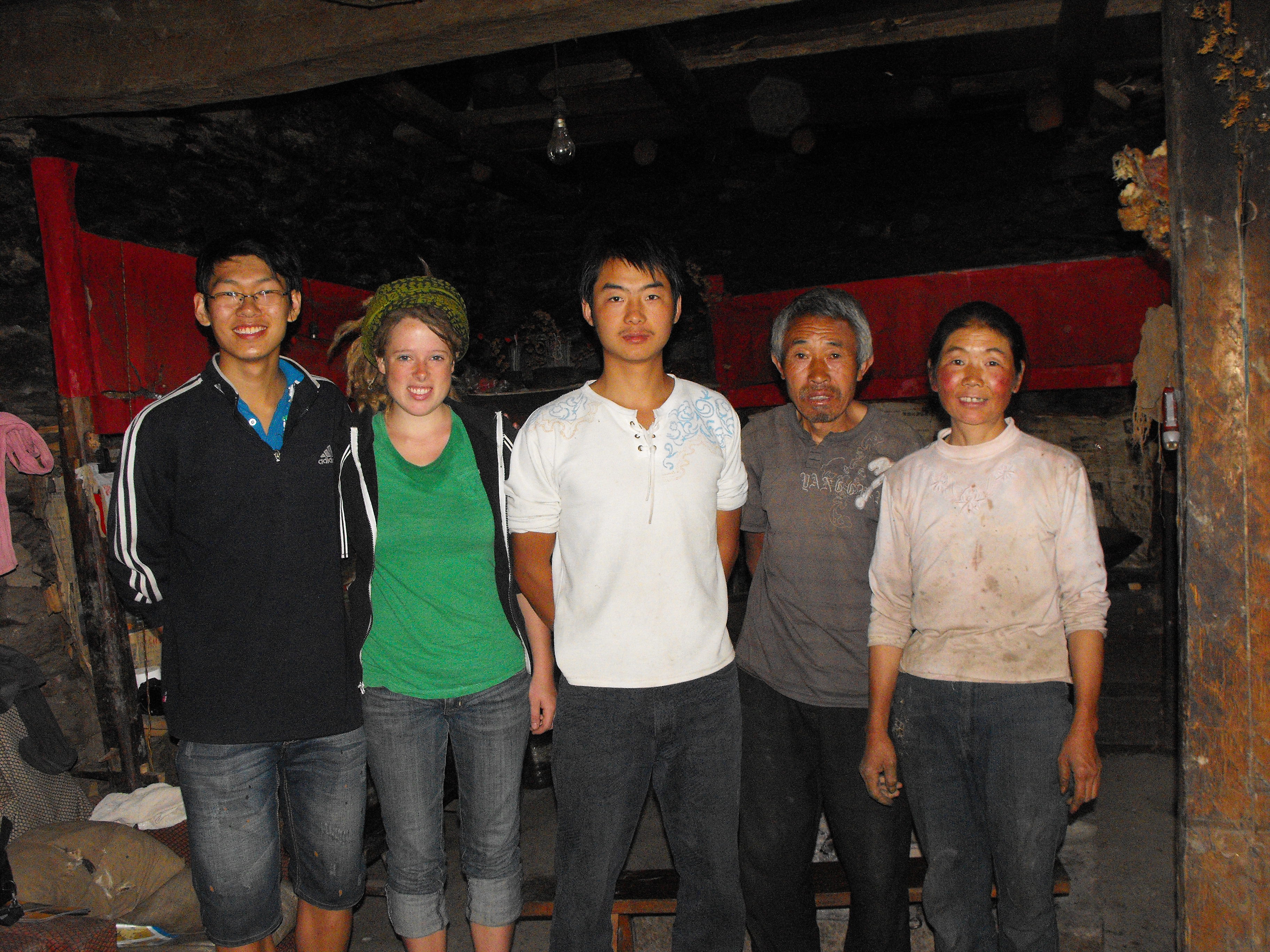
From left to right: Cheng, me, Peng, Peng's father and mother

From left to right: Cheng, me, Peng, Peng’s father and mother

Peng described to me how his family’s village, situated within Lixian county high in the mountains of Aba in northwestern Sichuan was at the epicenter of the 2008 earthquake. When he went back to help his parents rebuild their home, he realized many of the women were left with little support while their husbands were hired away on reconstruction projects outside the village. In hopes of creating a sustainable source of revenue for his neighbors, he hired a well-known woman from a nearby village to teach the women in his village the art of making traditional embroidered handicrafts. He paid all of their salaries during their training, and then bought everything they produced and took the products to Beijing to sell. In the end he was unable to afford the rent of the shop in Beijing, and he eventually returned to Sichuan to work at GVB without having recovered much of his investment.

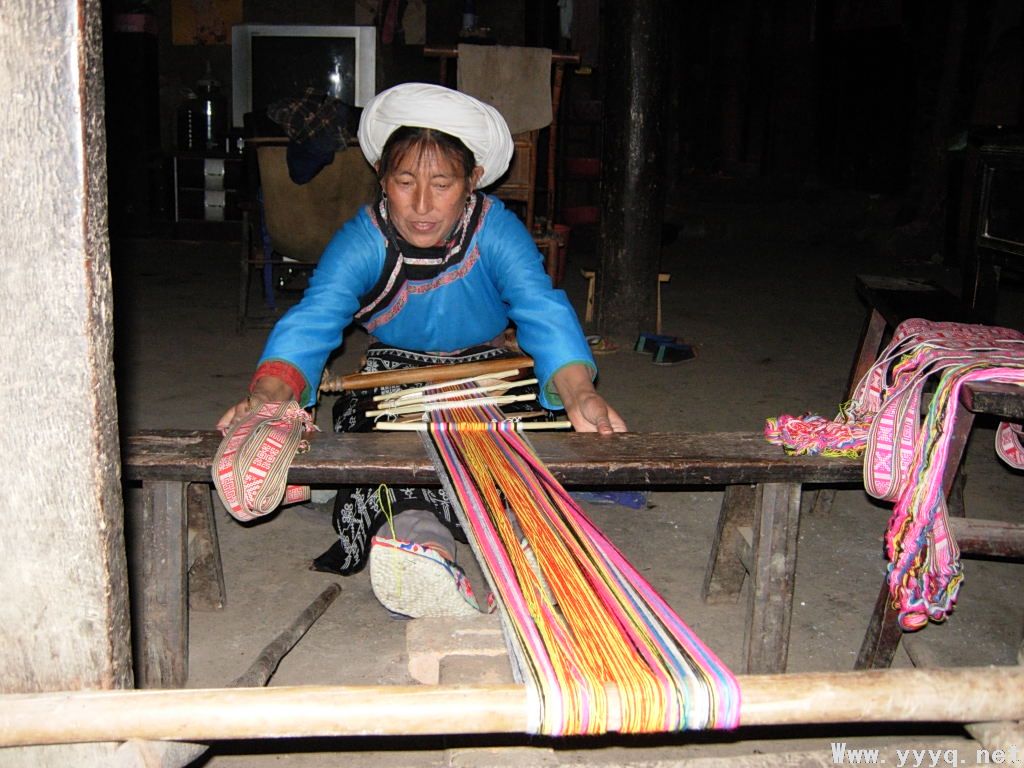
Women Weaving   Loom Weaving

Some of the women from his village weaving, photos courtesy of Peng.

Peng was planning to spend a week back visiting his parents at a time that coincided with the end of my internship with GVB, and we made plans to go back together so he could show me his village and give me some of his surplus handicrafts to take back to the US and try to sell. Our friend and fellow volunteer, Cheng, would join us for the first two days before returning to GVB.

We met up with Wang Peng’s brother-in-law in the capital of Chengdu, piled into a small van, and spent the next 7 hours traversing the mountains through Wenchuan district to eventually arrive in Lixian. On the drive the damage left from the earthquake was striking, and reconstruction efforts will still in full-swing.

Sichuan.earthquakeWhen we arrived at the base of the mountain where Peng’s village was perched, our van ascended the road zig-zag style until eventually dropping us off at the edge of a cornfield where we picked our way through the stalks until we emerged at Peng’s parents’ house. They warmly welcomed us in and served us tea. When his  mother heard that I was from the U.S., she asked me if that was far from their home. That night I slept in a bed in a room that was shared with Peng’s mother and father, while Peng and Cheng slept in an adjoining room.

Here's a view overlooking the mountain.

Here’s a view overlooking the mountain.

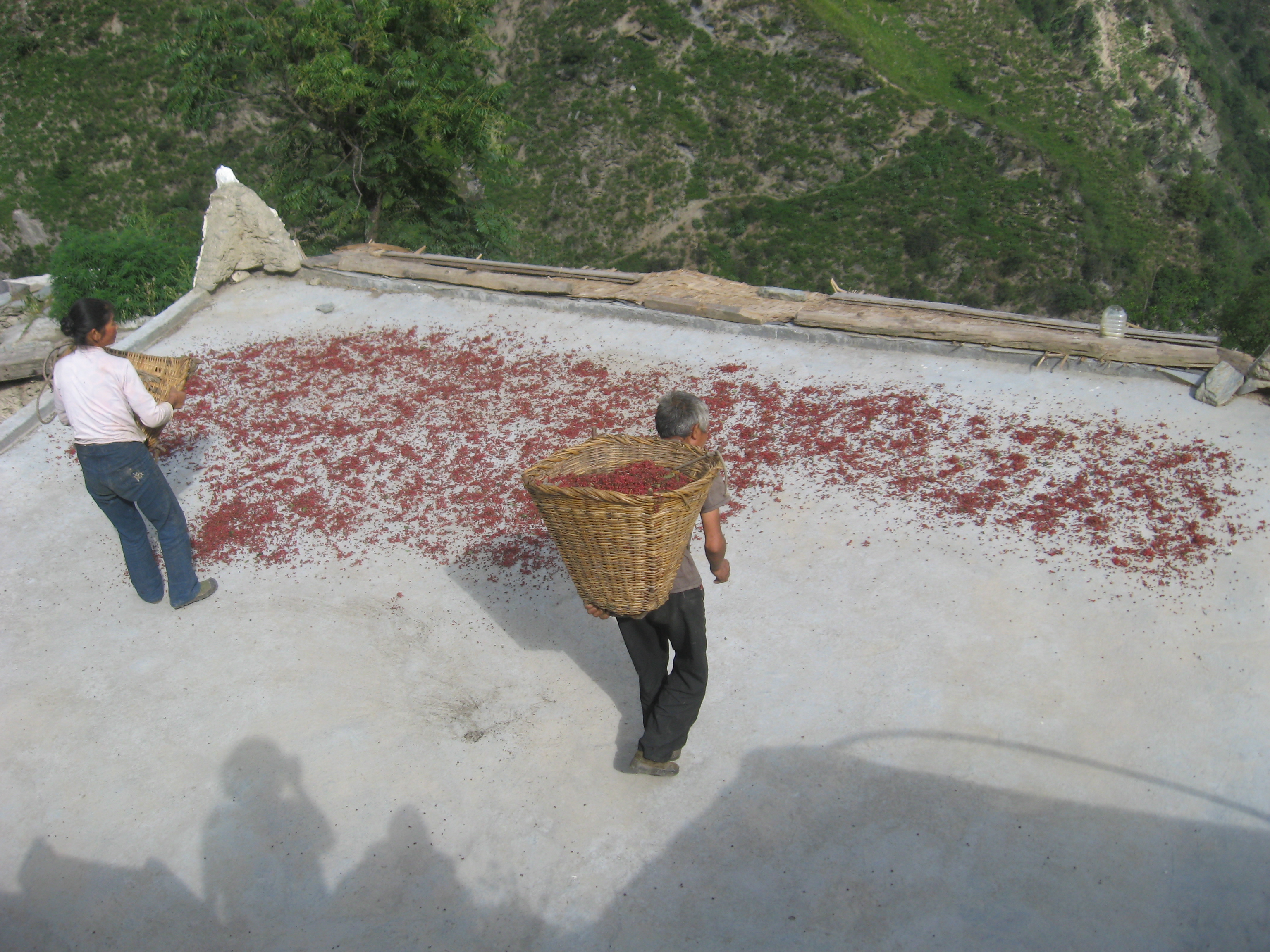
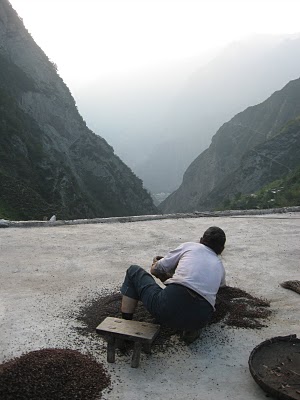
The following morning we helped Peng’s parents spread the huajiao seeds they had picked the day before out on their roof to dry. Huajiao is a small red spice used in traditional Sichuan dishes that grows on thorny trees along the mountainside. Many of the villagers harvest huajiao as a primary source of income.
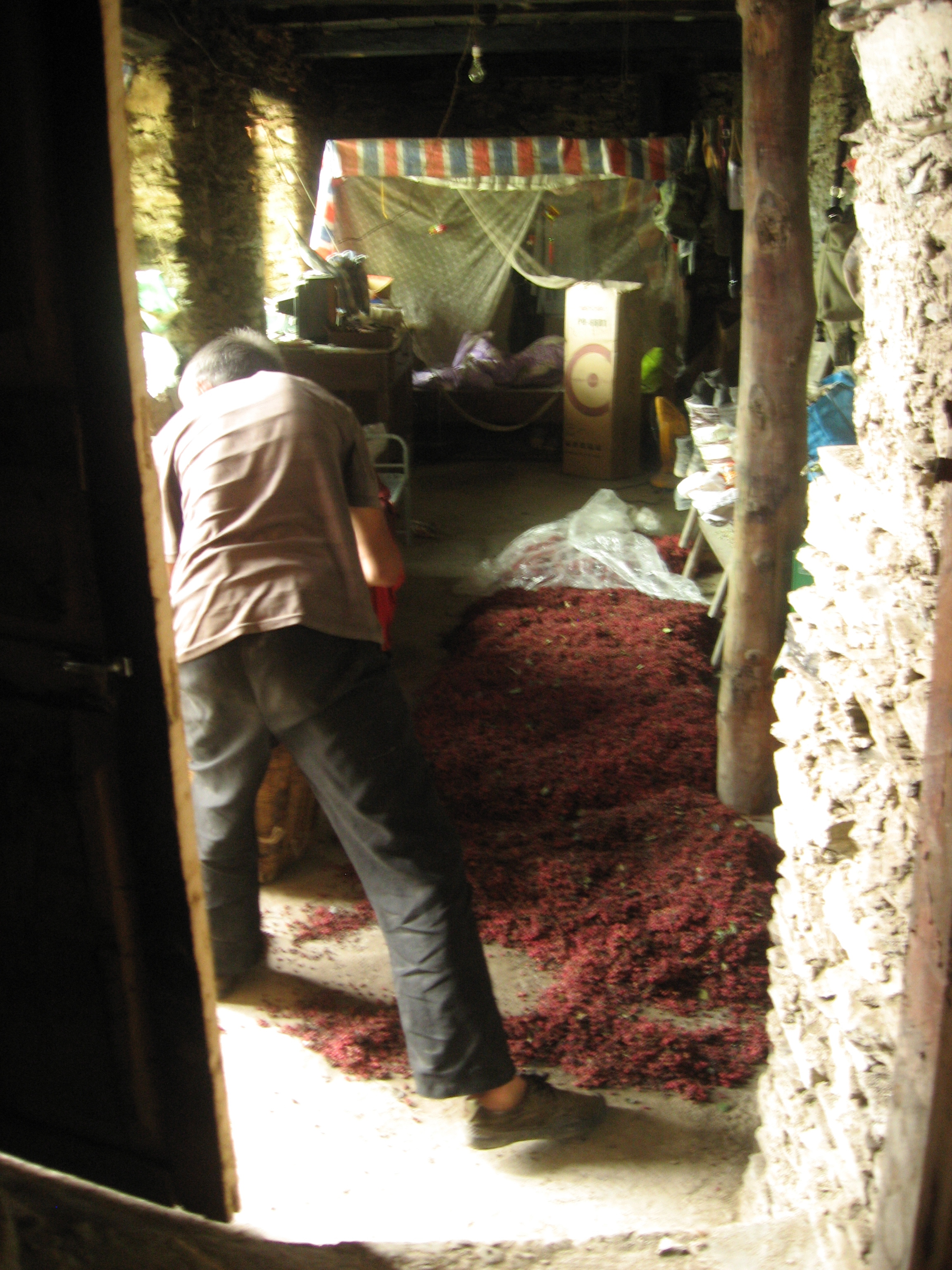
FatherHuajiaotoDry        FatherMOtherHuajioRoof

When we finished, Peng, Cheng, and I hiked further up the mountain behind his house. We stopped at a relative’s house where one woman proudly showed us the fungus they sell as an ingredient for Chinese traditional medicine. At another point after we had stopped for a rest, Peng showed me a building that used to serve as a schoolhouse, pictured behind me in the last photo:
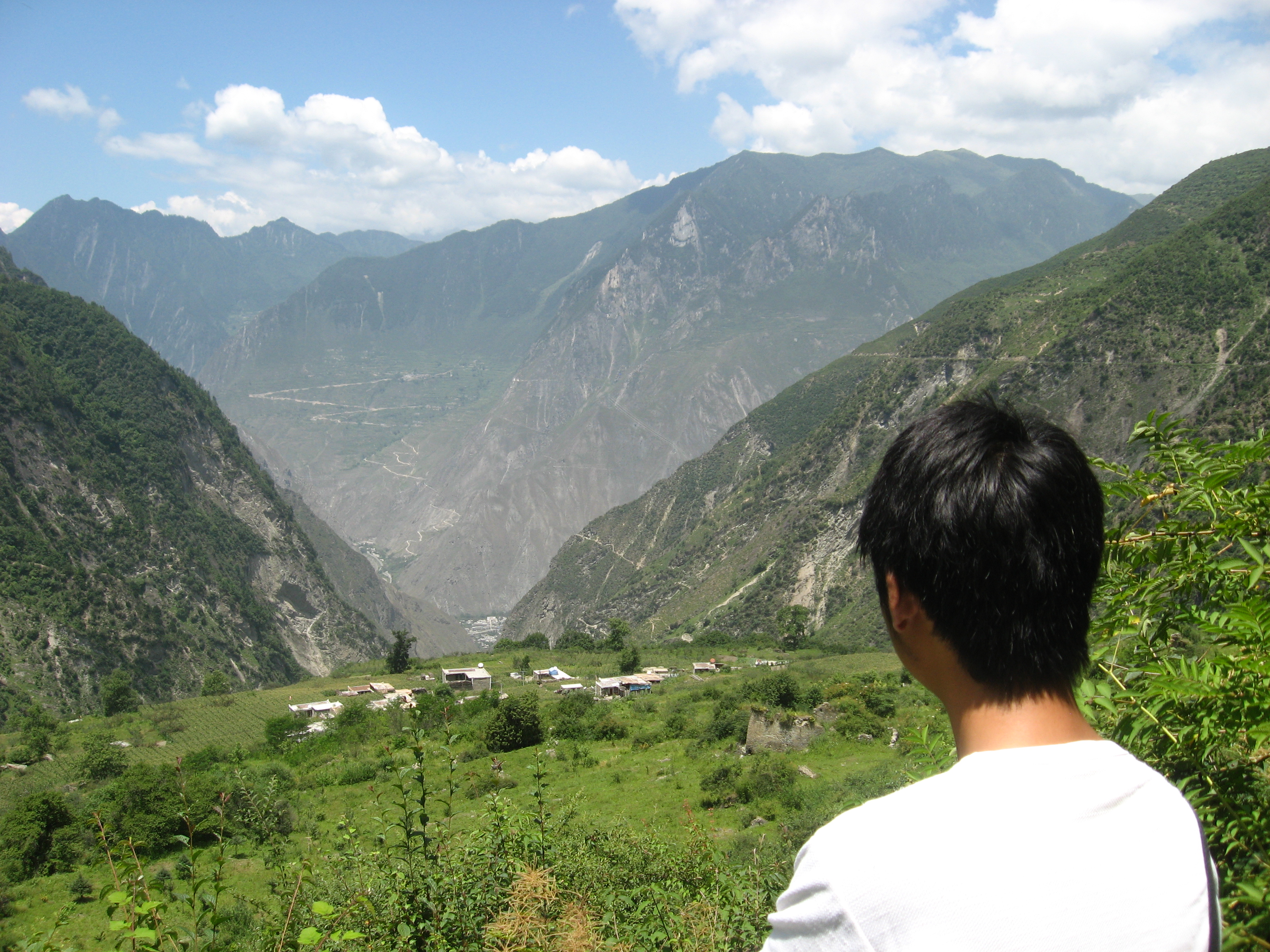
WangPengOverlookingMtn     IMG_0491

Dan&Mount     MeSchoolHike

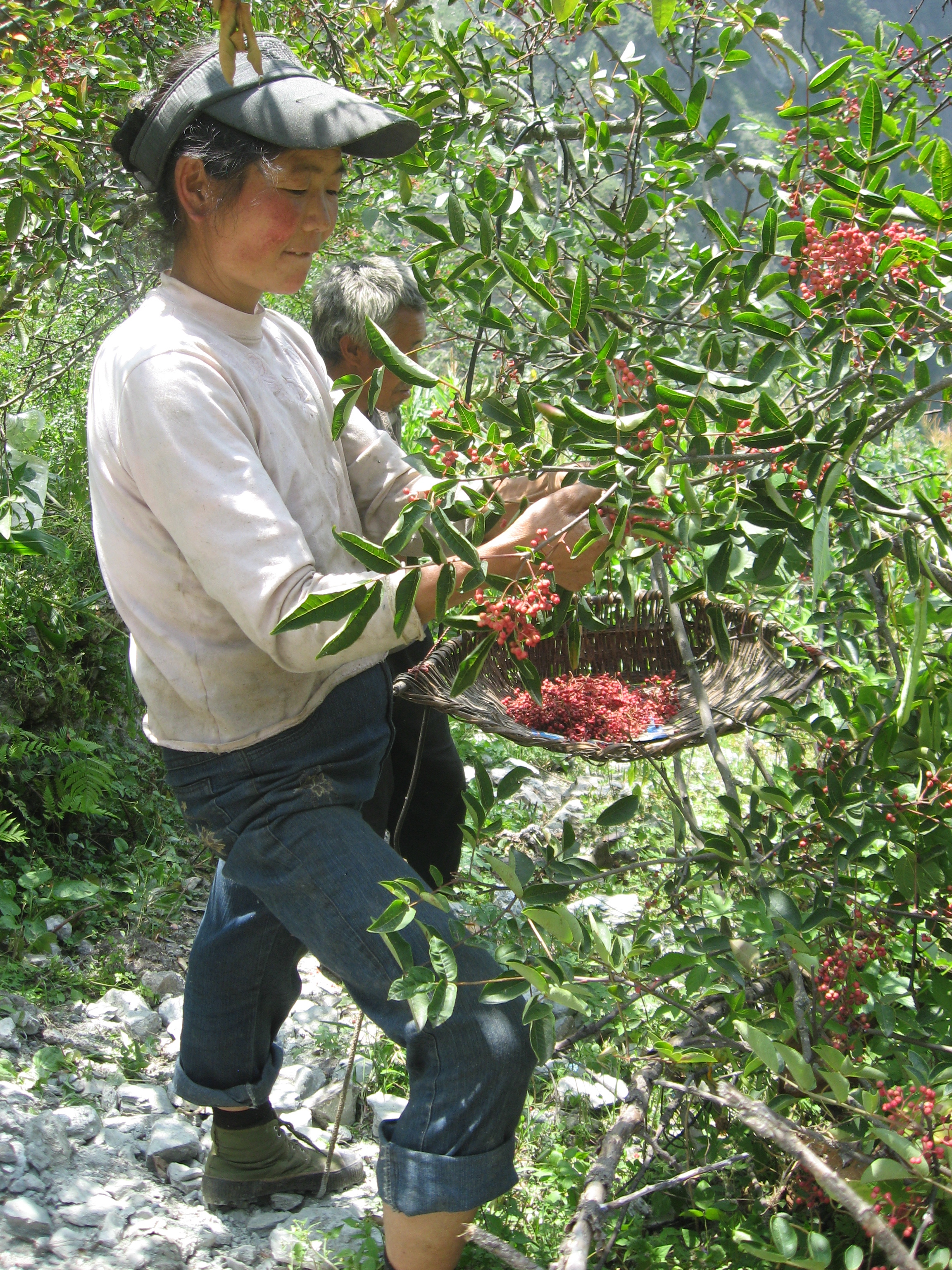
When we returned we went out in the fields to help his parents as they continued picking huajiao:

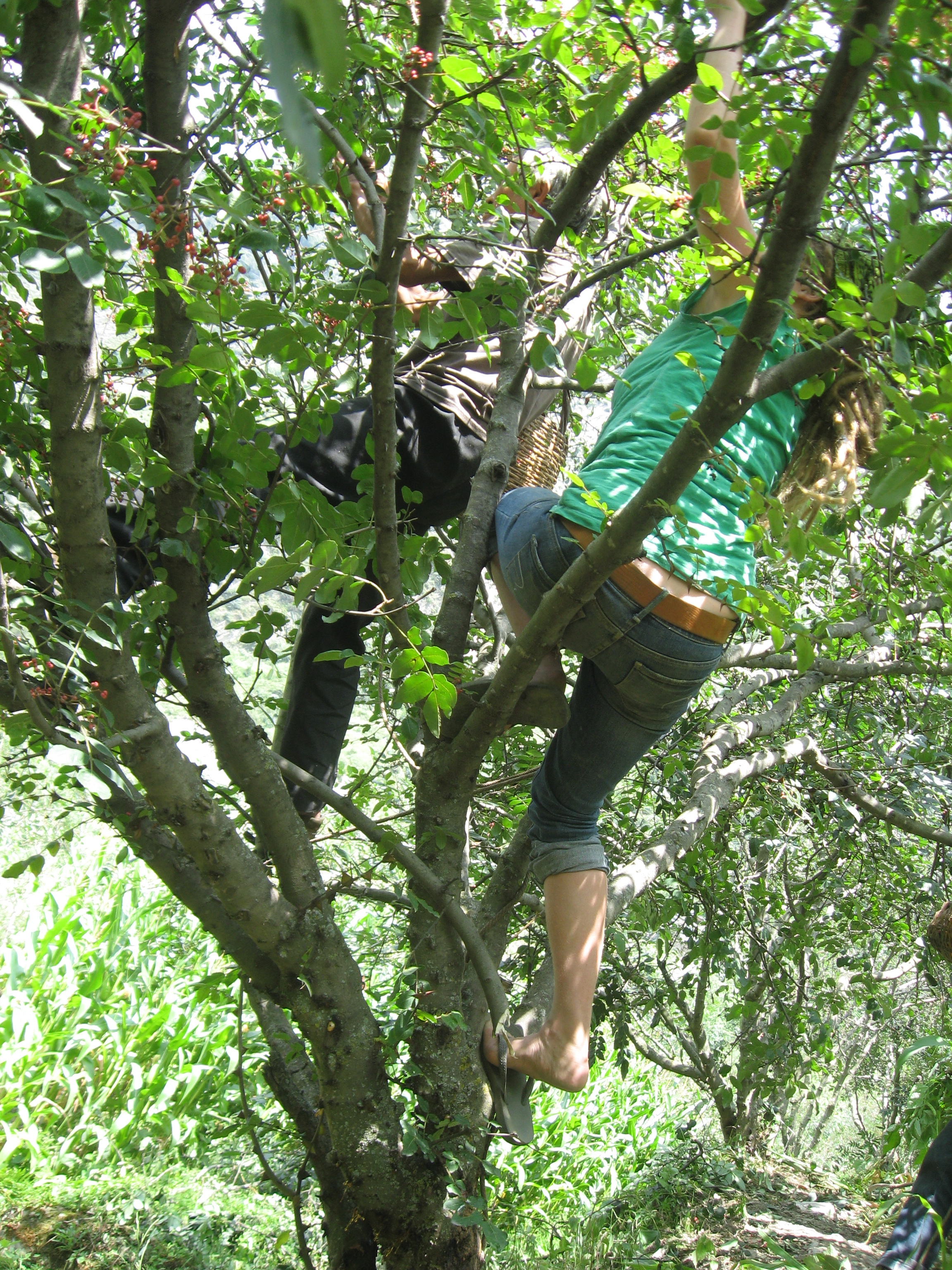
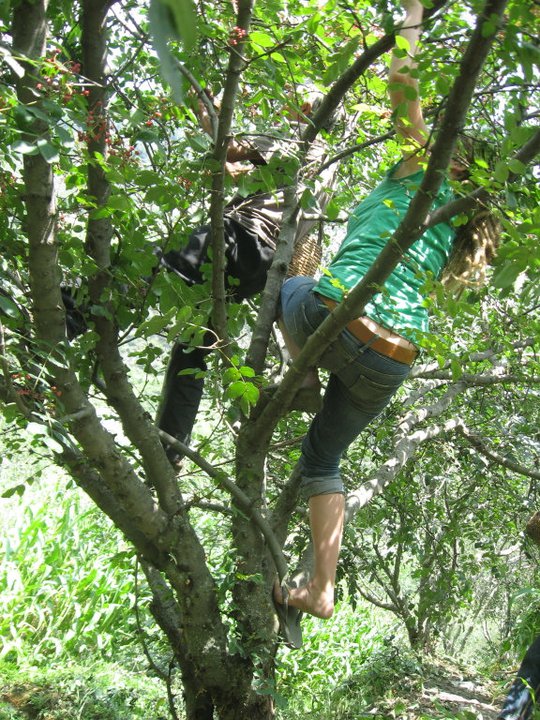
MePickingHuajiao WangPengPicking MeTreeHuajiaoDad

We talked as we picked, and our conversation meandered from Chinese politics: Peng told me he thought Mao was the most shrewd of  China’s leaders, followed by Zhou Enlai; to his own past: he never went to high school because of the test he would need to take to enter, but he used to be a soldier in Shenzhen; to US politics: he said it was bad for the US to go to Iraq because the US is so big and they attacked a weak country. I said no one liked President Bush, and he agreed. There were a lot of words he used that I didn’t understand, but Peng was patient with me as I often asked him to repeat what he said. After picking for three hours we returned to his house, and ascended to the roof where his mom was sifting the huajiao seeds that had been drying all day:
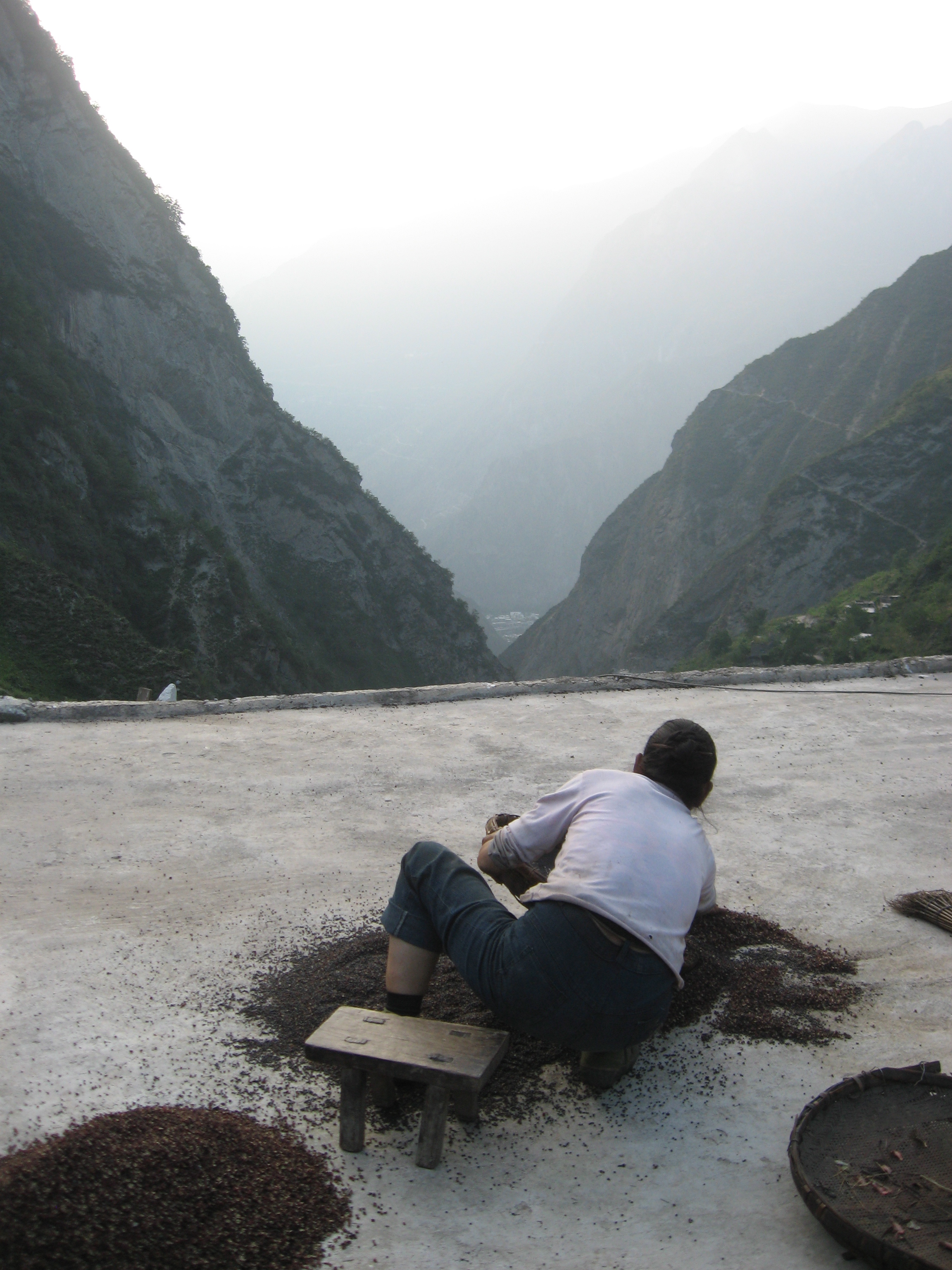
MOtherSiftingRoof3           MotherSiftingRoof2

Later that night Peng’s parents began to prepare dinner; his cousin came over with a fresh chicken, and they made potatoes with garlic his mom picked from their garden:

MotherCHoppingCHicken              DadPreparingDinner

While they cooked Cheng helped me ask Peng about how his family had been affected by the earthquake, and how he had started the handicraft business:

Everyone here can do needling work, he said, but if they want to sell it in the market there is specific training they need. Peng supported the first training for the people in Lixian. Not far from Lixian is another village called Maoxian, where he knew of an older lady whose embroidery work was very good, so he invited her to come and help train the women in his village. He used 20,000 RMB ($3,267) to pay the women and help cover their living expenses. At the time, he said, his intention was simple: to create a way to help the women make a living so they could rebuild their houses as soon as possible. But when he took their crafts to Beijing, there was basically no profit. In one year he sacrificed 100,000 RMB ($16,336) because the rent for the shop was 5,000 RMB ($816) each month. He had four friends who also helped by investing 10,000 RMB ($1,633) each, to help augment the 60,000 RMB ($9,802) of his own funds. His friends were studying at Beijing Ethnic University, and they helped him set up his shop along with an exhibition at the University, but in the end the rent fee was just too high. In March 2009 he returned to help his parents continue to rebuild their house, and the following year he began work at Global Village of Beijing. The women have since stopped embroidering because he doesn’t know a viable channel by which to sell the handicrafts.

The conversation soon moved to broader village life, and Peng said that a lot of people have left the village because there is reconstruction work available, but after two years there will be a problem because that work will be over. While many of the people there rely on huajiao, there is also a big insect problem that has been there for four or five years now, and they don’t have any exact solution to deal with the insects.

Before the earthquake everyone had savings and they were all comfortable, but after the earthquake everyone’s savings went into reconstruction, while their source of livelihood has basically yielded the same amount of earnings, so life is much more difficult now. Almost every house in the village had to be reconstructed.

His parents make 30 RMB ($4.90) for every half kilo (1.1 lbs) of huajiao they pick.

Cheng spoke with Peng’s parents, and they said they are very proud of him; that even though he sacrificed so much they can still support themselves and don’t need to worry, but he was able to help other people and that was a really great thing.

FamilyFireDinner

WangPengDnaielTVThe next morning I went with Cheng and Peng to the town at the base of the mountain, and Peng brought his parents’ television down with him to get fixed , which required that he strap it to his back part way down the road, and then strap it to the back of a tractor where his cousin was waiting to drive us the rest of the way down.

When we arrived at the base Cheng took the bus back to Daping to continue working with GVB while Peng and I ran some errands before loading everything back in the tractor, zigzagging partway back up, then hiking the rest of the way (again through the cornfield – at this point Peng not only had the TV strapped to his back but was also lugging a case of beer while I carried the relatively light load of vegetables). We spent the rest of the afternoon picking huajiao.
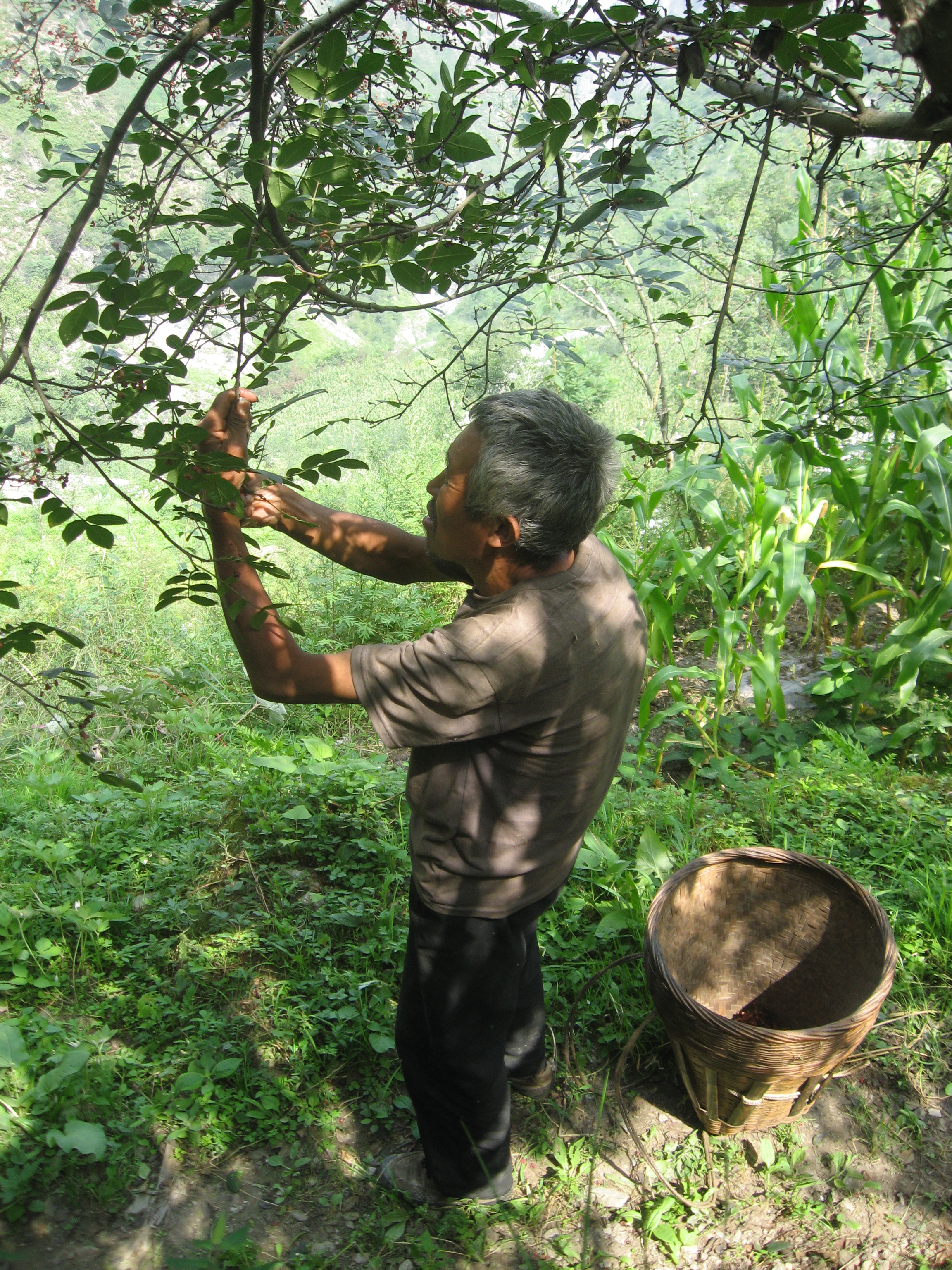
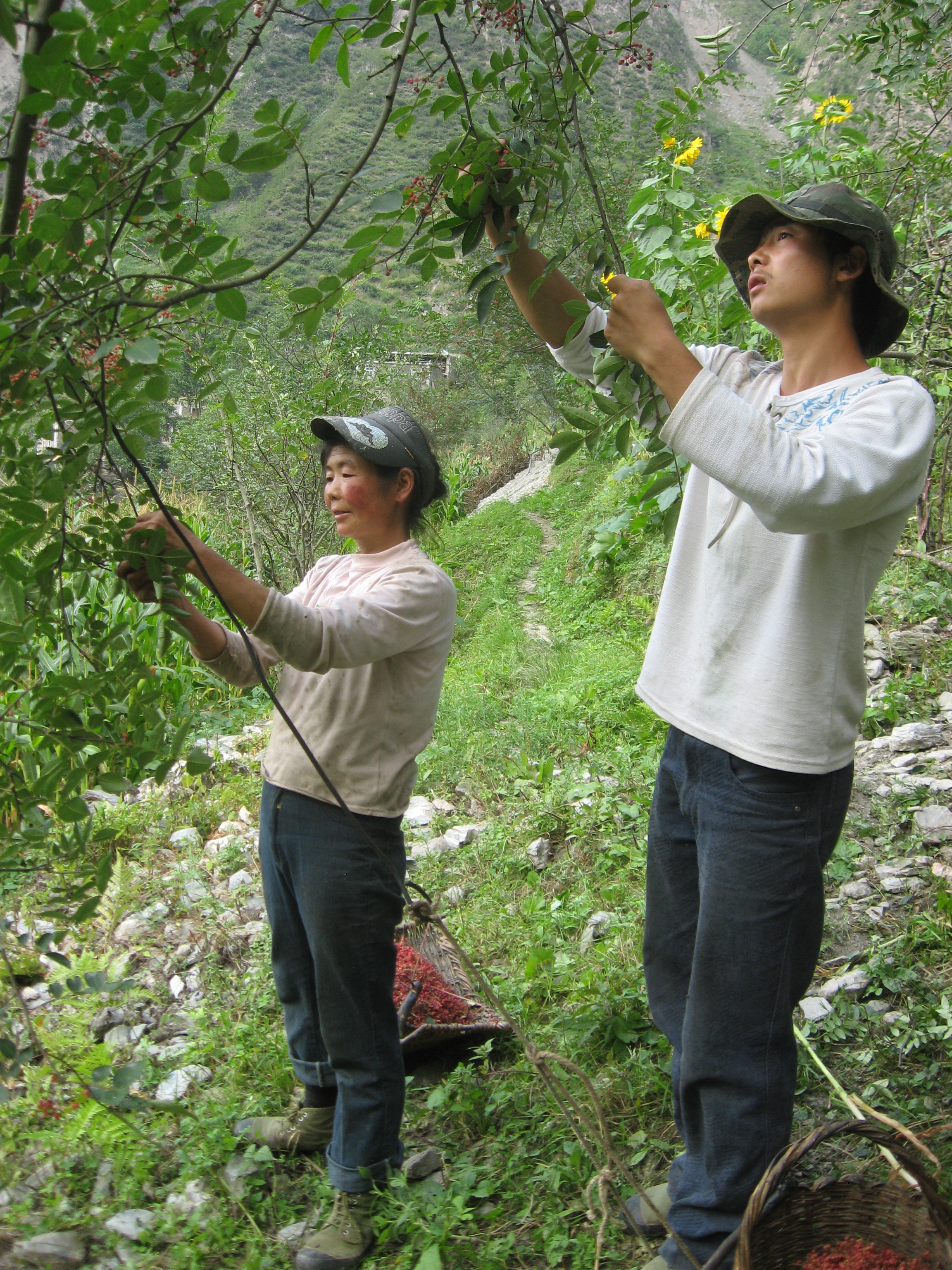
DadPickngHuajiaoFromAbove WangPengMOtherPicking2 MotherHuajiaoPicking

Peng said he has helped his parents pick huajiao since he was a kid, and his mother told me that every morning she gets up at 5:30am, and never takes a day of rest.

The next day was my last full day with Peng and his family. After breakfast we returned to the fields where we worked until the late afternoon. Peng’s parents work side-by-side all day, and at night they both help cook, equally sharing responsibilities – his dad would wash the dishes, and they both prepare the fire and cook the vegetables. They do not have a refrigerator; instead if food is not finished for one meal they will save it and serve it for the next meal.

A lot of questions his parents asked me were about money in the US – how much do things cost? What do people in my hometown do for work? How much can someone earn in a month? How much did my plane ticket cost?

The following morning Peng and I said goodbye to his family and hiked back down the path where his cousin was again waiting take us the rest of the way down by tractor.
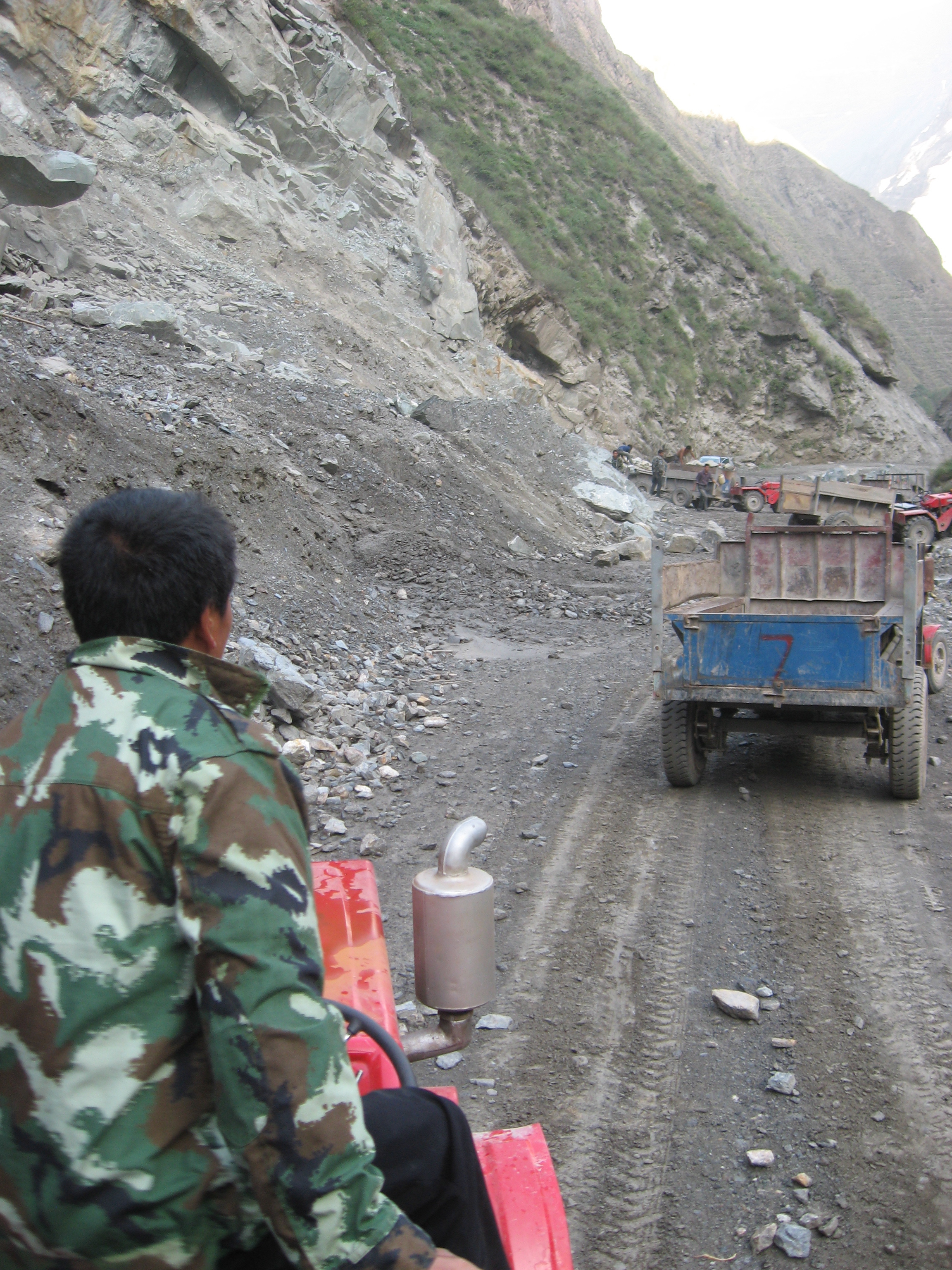
DownMtnTractorPeng told me the road leading up the mountain had just been built in 2009, but before that they would have had to walk up a parallel path that leads up another side of the mountain. When he was younger, he did not go down often. At one point during our descent we saw some young men heaving rocks down the side, and he said that is because they are still in the process of constructing the road– they will take large rocks from higher up the mountain, often by throwing them down the side, and then stack them along the road to keep it from eroding.

Back at the base of the mountain we took the bus to Chengdu, and after helping me check into a hotel he later returned with his wife and their friend, and the handicrafts he would give me to take back to the US. After writing out a description of everything and how much they would like me to sell them for, his wife and their friend showed me how to wear one of their traditional dresses– we all laughed as I modeled and took photos.

MeWifeDress

We parted that night; Peng returned to continue working with GVB while the next morning I took the train back to Hangzhou.

After I returned to the US I displayed Peng’s crafts in my community-based high school’s clothing store that teaches students business skills while providing a revenue stream for the school (you can check out my fantastic community-connected high school here: http://www.tnsk.org/). It was just a few months ago that all of Peng’s crafts sold and I was able to send him all of the profit.

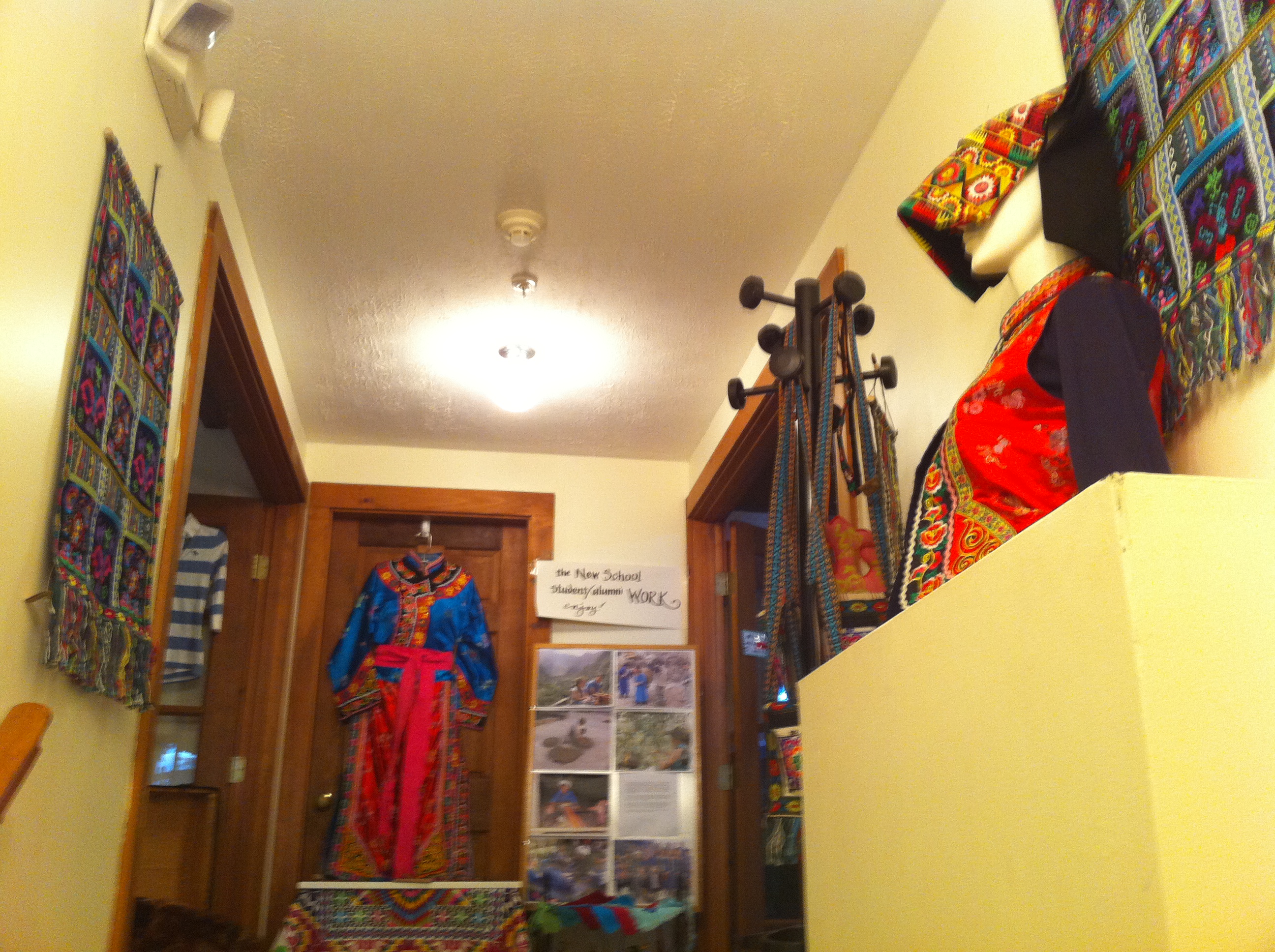
Back Camera       Back Camera

After returning to Hangzhou in August I spent the rest of the month teaching English in the city before continuing my fieldwork with Global College’s China Center: over the next 4 months I visited four farms in four provinces, from the northeast province of Jilin to the southern island of Hainan, more to come on these adventures in upcoming posts!

HuajiaoBasketLastphoto

Posted in 2010 Rural Field Visits | Tagged , , , , | 5 Comments

Sichuan Part I: Global Village of Beijing

Before detailing my new rural farming adventures (I’ve scheduled my first one for the National Day holiday week of October 1-7) , I’m going to try to provide a better context on what I’m doing and why through my 2010 rural farm visits.

Technically, these began in July when I spent three weeks volunteering with an environmental NGO, Global Village of Beijing (GVB) on a rural mountaintop outside Chengdu in Sichuan province.

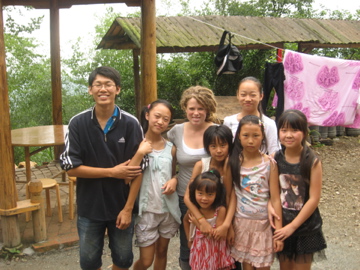
A few of the local kids from the summer camp GVB's volunteers helped run, along with a fellow volunteer and myself.

A few of the local kids from the summer camp GVB’s volunteers helped run, along with a fellow volunteer and myself.

As I was reviewing my field notes from GVB, I remembered that I left there feeling I did not have a clear picture of all the contributions the NGO had made to the local community, and I would mostly attribute this to my insufficient language skills.

view of ngo:room

GVB’s main building, along with some of the kids from summer camp playing outside.

Nevertheless, I can say that the NGO gives 49% of their yearly profits to be split among residents in the village. I heard that they played a role in helping families rebuild their homes after the 2008 earthquake that destroyed much of the village, and that the new homes were designed to withstand another earthquake while integrating more local, sustainable materials and designs. I also heard from a university student who was visiting the NGO that after the earthquake hit a lot of people had to leave their houses and lost their means of livelihood– many of them were living in temporary housing at the base of the mountain where the government had relocated them because these residents couldn’t afford to build new houses up on the mountain. He said these people (I believe he was referring to the people that rebuilt their homes on the mountain) now only make money from one crop, so he and his classmates were designing a social enterprise for the community members to take over.

I later asked another volunteer why some people on the mountain were able to get new houses while others could not, and he said some families were relatively wealthy because of huanglian, a medicinal crop that can be harvested for about 20,000 RMB ($3,268) per acre. These people were able to build new houses that cost around 150,000 ($24,515) RMB. Meanwhile, the people that were relocated down the mountain and living in temporary government housing were those that couldn’t afford to rebuild their houses.

Here's a view looking out from where the NGO was positioned on the mountain.

Here’s a view looking out from where the NGO was positioned on the mountain.

At the time of my visit GVB had finished with development and had moved on to hosting trainings and tours to the village to promote environmental protection and sustainable rural development more broadly across China, particularly to university students and other NGOs. The woman that started the NGO, Liao Xiao-yi, has received international accolades as an environmental activist, no easy feat in a country that does not encourage activism.

Through another volunteer I also learned that in China the government sucks up a lot of money intended for NGOs and grassroots organizations because the large foundations like the Red Cross are required to pass all their donations through the government, and without oversight no one really knows what happens to the money– it doesn’t go to the small organizations.

At one point, I heard from another volunteer at GVB that the NGO did not have a good relationship with the local government because it had helped to close down a local mine that some of the local officials used to work for. If true (I did not confirm with a third party), this reflects an important concept in China: power and policy are not exerted and enforced in a simple top-down chain of command. Rather, they are more cyclical and also depend on informal connections (I’ll give more examples of this later). I am guessing that the NGO’s national recognition, and especially Liao Xiao-yi’s connections (I mentioned before that she was the Green Ambassador to the 2008 Olympics) may have provided some leverage over the local government that perhaps enabled them to close the mine despite local official disapproval.

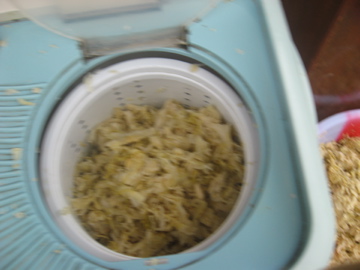
Who else do you know that can say they stuffed cabbage in a washing machine?

Who else do you know that can say they stuffed cabbage in a washing machine?

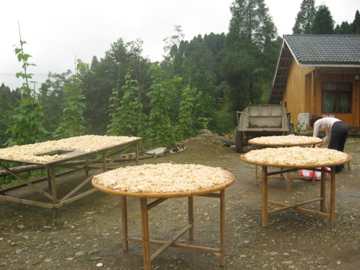
One day, one of our chores was to squeeze the juice out of pickled cabbage and then lay it out to dry. We began this by squeezing out the cabbage by hand (which was going to take all day) until one clever staff member realized that we could put it in the washing machine on the spin cycle.

The cabbage, after cycling through the washing machine, was laid out to dry on tables.

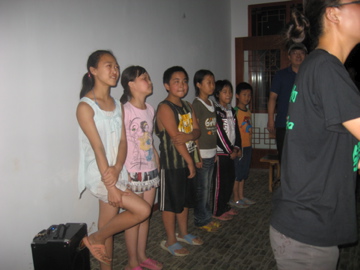
Another task for the volunteers was to teach the local kids a song in English about recycling so they could perform it during community-wide presentations that were held when groups of tourists came to visit:

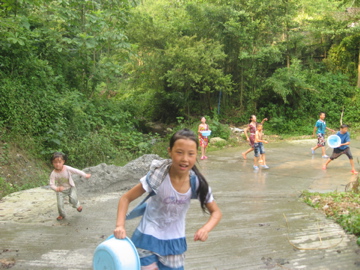
One day we took a break for rehearsals to organize a water fight.

One day we took a break for rehearsals to organize a water fight.

There is metal

There is glass

There is paper

There is plastic

We pick up the trash

And throw it away

In the trashcan

We recycle

After one presentation, Liao Xiao-yi became quite upset with the volunteers (there were about five of us), and said that we should be using our afternoon ‘summer camp’ to prepare the kids for these performances, and that from then on that was how the summer camp needed to be utilized (we had also been using it to play games and teach English/culture lessons). She said that the year before there was only one person running the camp and the performances were still so much better. So we had a pow-wow and one of the volunteers came up with an alternative and more challenging song to teach them, here’s an excerpt:

Here's the kids performing their song during one of the community's presentations for a tour that had come to learn about GVB's work.

Here’s the kids performing their song during one of the community’s presentations for a tour that had come to learn about GVB’s work.

The forest is a habitat

A very special habitat

It’s where a bear can scratch it’s back

It keeps the ground from rolling back

Renews the oxygen, in fact

The forest is a habitat that we depend on.

However, the next morning Liao Xiao-yi became upset with us again, saying that we shouldn’t change the song because there wasn’t enough time to teach a new one. A few of the volunteers, including myself, were relegated to weeding the fields while the others went back to teaching the kids the recycling song.

It was in the fields that I met Peng, the manager of the NGO’s crops. While we weeded, I asked him questions about rural land-use, like how the land lease and land exchange system works in China. I was especially curious about a 2008 policy that would allow farmers to directly transfer their land-use rights between each other, rather than having to go through local officials. I had heard the officials were notorious for buying land-use rights from farmers for cheap and then selling the rights at auction for a large profit.

He said that farmers can transfer the land leases themselves, but most farmers would rather hang onto their land so they can go back to it. There is often a set market value for land decided by the government, but at auction the land will be sold for much more than that value.

I asked what would be the reason a person would decide to transfer their land-use rights or keep them, and he said that if a family doesn’t need the land to subsist they would sell their land-use rights, but if the family needs the land to make a living they will hold onto their rights. He later told me that the land the NGO has now used to belong to a group of farmers from the mountain, but GVB now just pays a yearly amount to these farmers to use it instead.

While working alongside Peng, I learned that his village was decimated during the earthquake, and in the aftermath when many of the men were hired on reconstruction projects outside the village, Peng paid a woman from a neighboring village to come and train the women in his village in the art of a making traditional embroidered handicrafts. He paid all of the women’s salaries, and then bought everything they produced and took the products to Beijing to try and sell. But in the end he was unable to afford the rent of the shop in Beijing, and returned to Sichuan to work at GVB without having recovered much of his investment.

Peng was already planning on going back to visit his parents later that week, and after becoming friends we made plans to go back together so he could show me his village first-hand and give me some of his surplus products to take back and try to sell in the US.

That’s all for now– I’ll detail my Aba adventure in my next post!

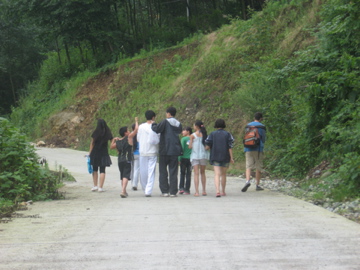
Taking a walk down the mountain - the road is paved now, but used to be dirt back in the day, making travel up and down a more formidable challenge.

Taking a walk down the mountain – the road is paved now, but used to be dirt back in the day, making travel up and down a more formidable challenge.

Posted in 2010 Rural Field Visits | Tagged , , , , , | Leave a comment

The Beginning! (for real)

I made it! I left on Sept 1st and arrived in Hangzhou on the 3rd. The 2nd was my (and my twin’s!) 25th birthday. I slept through most of it, which has become my post-23 preferred method of celebrating anyway.

When I left the airport I was feeling proudly independent as I shrugged off some assertive taxi drivers, hailed my own cab, recited the address for the university without looking it up, and eventually registered and checked into my dorm all on my own. However, when I checked my email that night I had some anxious messages in my inbox from my program’s student coordinators who had been waiting for me and expected to meet me upon my arrival. That now adds up to at least a dozen +1 lessons that my secret tendency to demonstrate (to really no one but myself) my aptitude for doing things on my own is often more detrimental than beneficial. Fingers crossed my effusive apologies counteracted my first impression.

Dorm life will deserve it’s own post, so I’ll write more about that later. But for now I’ll just say I have a dorm mate who is from South Korea, so we only speak Mandarin, which is awesome because my desire to practice makes me way more outgoing than the English-speaking version of myself.

Last week was a run-around of various settling-in chores that aren’t really worth writing about. I’ll just briefly say that 50% of my time was spent getting a paper from one office, taking it to another office for some signature/stamp of approval before bringing it back to the original office. I’m still only half-way through my bureaucratic-run-around-to-do-list. This week I will attempt to confront the biggest hurdle as I have to take my physical examination form for approval at the university hospital, then bring it to the head of my program to get some other approval form, and then take that with my passport/visa to register at the police station. A few students attempted this feat on Friday, and after finally waiting in line for a few hours at the police station were denied for some red-taped reason or other. We have 30 days to do it, so it’s really just a pain more than a source of anxiety.

Exif_JPEG_420

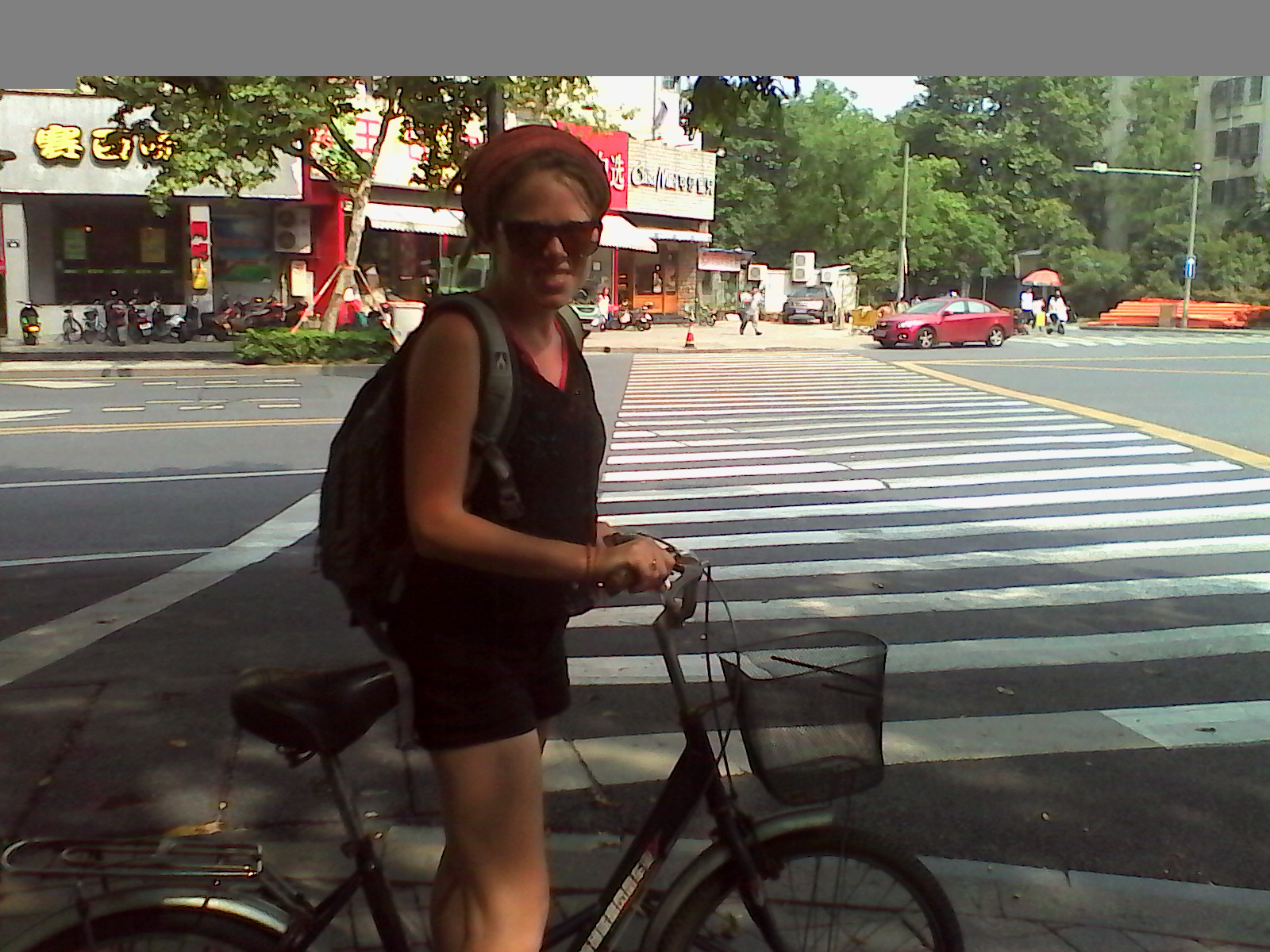
Here’s me on my new bicycle. I picked this lucky winner out of the bunch by asking the bicycle-shop-owner which one was the least likely to get stolen.

I’ll also just add that another 30% of my time was a cellphone albatross: in short, at&t is an ogre*, and if anyone knows how to subversively unlock a phone, I’ll send you an awesome pair of chopsticks monogrammed with your initials.      

To celebrate my last day of pre-class freedom, this morning I went for a hike. In case anyone associates hiking in China with any rugged preconceptions, let me just say that 99% of the time you are not on a trail, but are walking up stairs set in the side of a mountain:

Exif_JPEG_420

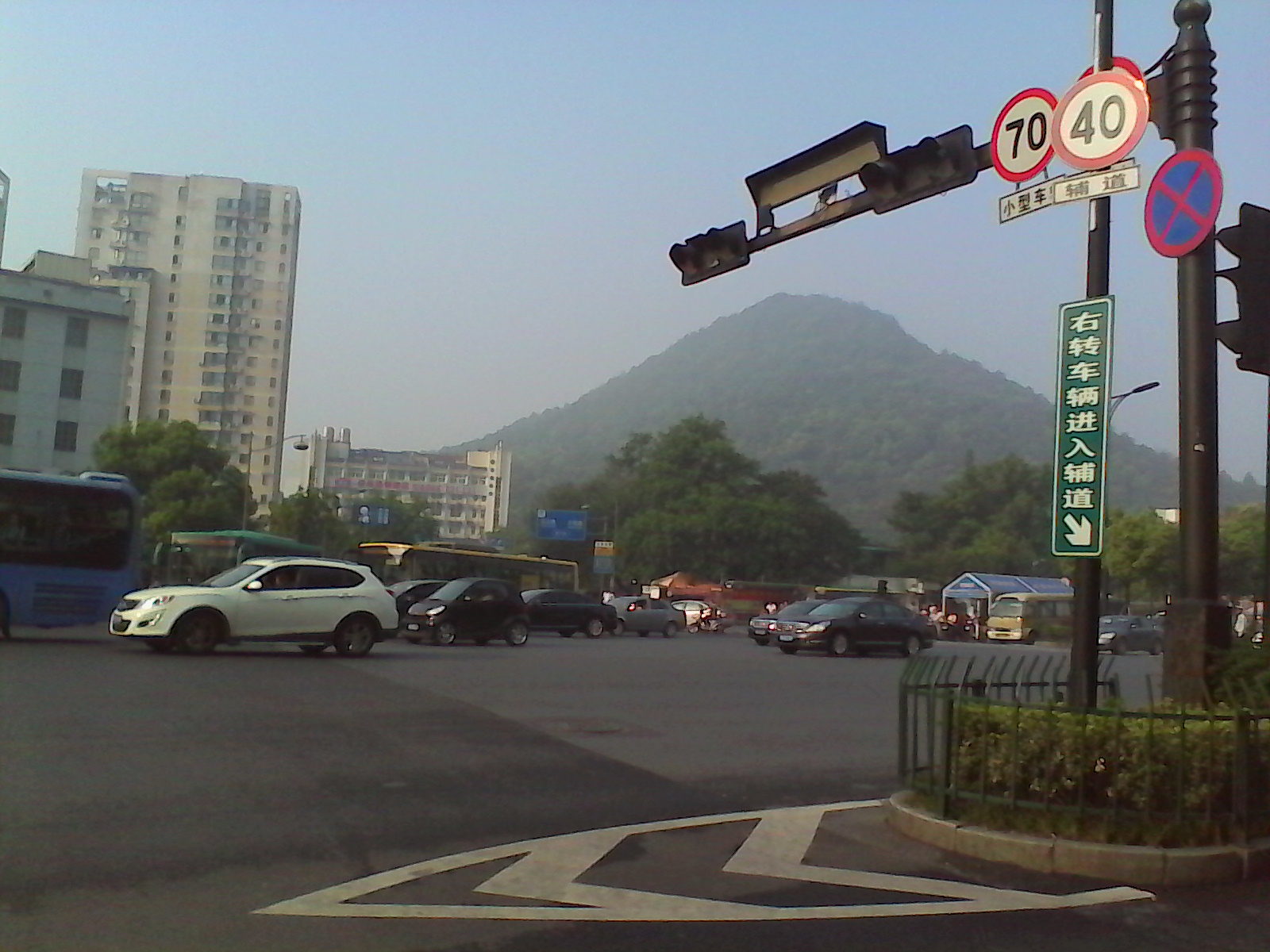
This is the mountain I decided to hike. In my pre-dorm China life, I lived in that tall building on the left.

Here’s the mountain. In my pre-dorm China life, I lived in that tall building on the left.

Here’s the mountain. In my pre-dorm China life, I lived in that tall building on the left.

It only took about 30 minutes to climb to the top. Once I got up there I remembered there is path that follows a succession of hillsides behind it, so you’re free to meander for a good 3-5 hours.

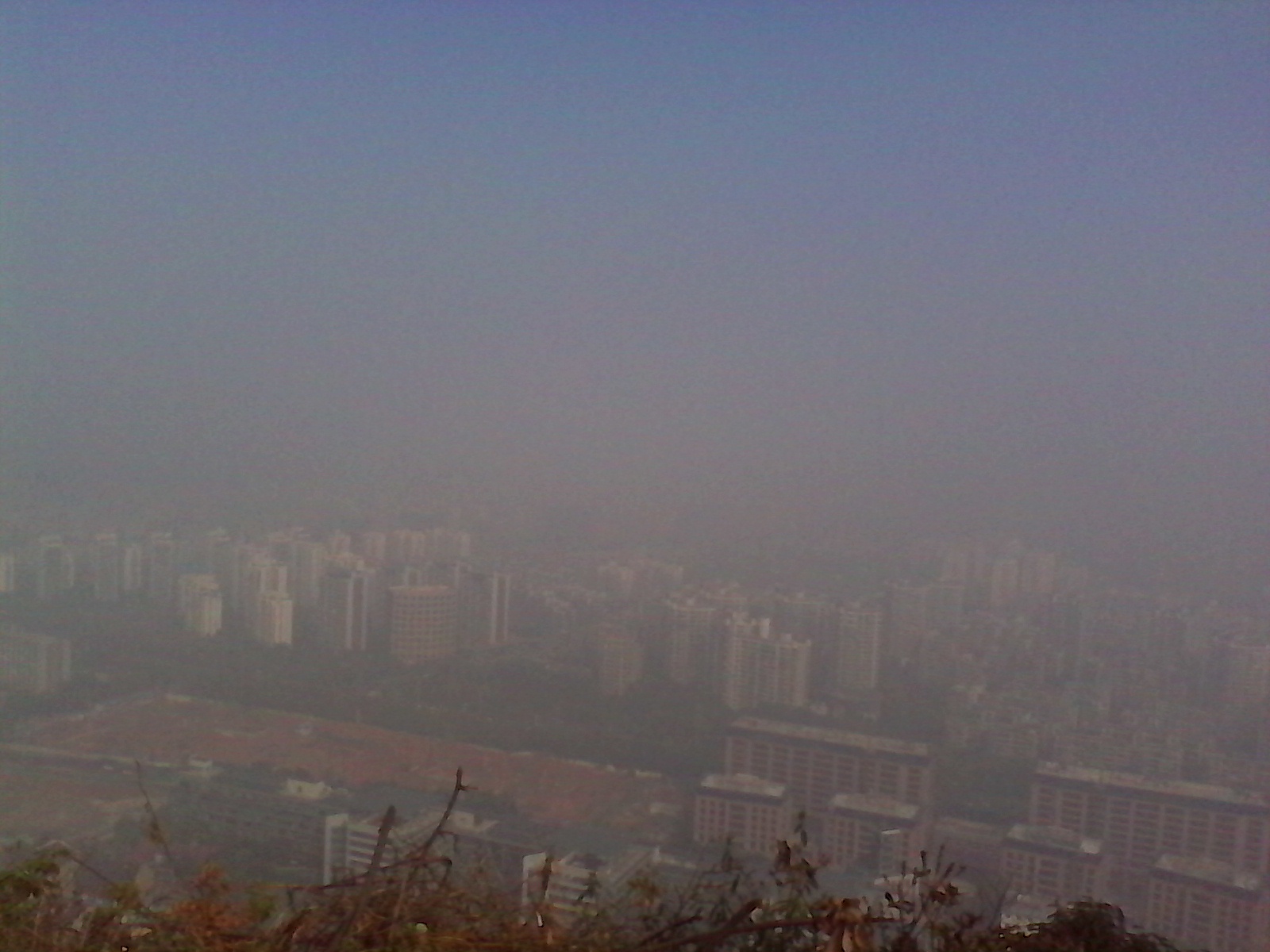
Here's a view from the top overlooking one of Zhejiang University's campuses.    And here's a view overlooking a side of the city adjacent to the campus.

Left: a view from the top overlooking one of Zhejiang University’s campuses. Right: a view overlooking a side of the city adjacent to the campus. This was not a cloudy day, but really just the status quo. Nevertheless, I’d still take the pollution in Hangzhou over Shanghai or Beijing any day.

While hiking along the top I stopped to ask a girl about my age to help me take a photo, but instead ended up making a new friend. Her name is Shi Mei Li, and she works in something like a fiber optics factory here in Hangzhou, but she grew up in Fujian and her parents now live in Shanghai. After the usual exchange of where we’re from/what we do I jumped into questions on my favorite topic, China’s rural land-use system. My preferred method for expressing my curiosity is simply saying I’ve heard they have a different system than what we have in the US, and then wait for an elaboration. Shi Mei Li said yes, individuals cannot own land, but it is owned by the government**, and rural families have the right to farm it. Most rural families are poor, and so they will go to the cities to find some form of work while returning home for the harvest seasons. She said she believes the system where the government owns the land is better to take care of the environment, but that also farmers in America are not as poor as those in China. I replied that it is true that they are not as poor, but that rather than every individual having a piece of land to rely on, there are also just a few large agricultural businesses that make a lot of the profit.

I then asked what she thought– if rural farmers had a choice to sell their land and permanently move to the city, would they take it? She said that it is very complicated, in the cities the education and medical care is better, so when they are thinking of their children that is what they would choose, but when they arrive in the city they would face many financial challenges and it would be very difficult to find permanent full-time employment (in China there is what is called the hukou status: the government divides citizenship between urban and rural, if a rural citizen wishes to move to a city without an urban hukou, they must pay more for education for their children and for medical fees). However, in Shanghai she explained that they recently changed the hukou system and citizens with a rural hukou are no longer going to be subjected to these additional fees, but her father had to pay more for her education when her family moved to Shanghai.

Our conversation meandered as we walked, and after talking about a friend she has that does not get much time off because he does some work related to the government and the police, she said that many people in China do not approve of the government. It is better when you can at least make a comparison, she said, but here we have nothing to compare to, we only have this one party.

I replied that in the US there often seems to be this idea of China that you cannot say bad things about the government, even when discussing with your friends, but she laughed and asked why would people think that? Of course we can say what we want to each other, but we cannot go to a government representative and say these things. In the US you can go to the government and ask questions and expect answers, but here we cannot ask questions and there is no transparency. I said that the US is not like the situation in China, but transparency has also been an issue for us, like with drones (in case you’re wondering, I do not know the Mandarin word for drone, instead I said “like this plane that flies and kills people but no one is inside the plane”, but she said she knew what I was referring to). This is something the President has said he will tell us about, I continued, but still we know very little.

We covered topics from school life and the dreaded gaokao (the university entrance exam every senior must take– I’ll cover it more in later posts) to China’s plethora of dialects (she speaks 3- Shanghaihua, and two others from her hometown) and our struggles studying English/Mandarin, to our families and plans for the future.

When we arrived back at the bottom of the mountain where I had parked my bicycle, we exchanged numbers and made plans to meet again one weekend soon.

Side note: I am omitting quotation marks because I do not want to assert that what I write is an exact, word-for-word translation of what someone said, especially without having taken notes during our conversation.

*see: http://www.credomobile.com/lp/ext/oct12/top-10-att.aspx

**To clarify, in rural China land is owned by the collective, which is the counterpart of state-owned land. In urban areas the state owns the land but families own their house on the land. So the land is either owned by the collective or the state.

Posted in Zhejiang Province | Tagged | 1 Comment

The Beginning! (sort of)

Welcome to my blog! For those of you that do know me, you’re probably smiling because you’ve heard my global-justice-through-land-tenancy spiel at least a dozen times, and you’re impressed/relieved that I’ve finally created an outlet outside of your ears by which to spout my sapience. For those of you that don’t know me, double-welcome! I hope my past adventures will spark your curiosity enough to keep coming back, because I have a whole two years of new adventures in store!

Here’s the basic gist on what’s to come: on September 1st I will be flying to Hangzhou, China where I will begin a China Studies Master’s program at Zhejiang University with a full government scholarship. While I am pumped on the master’s program, I am doubly-pumped on the opportunity to continue my field research from undergrad, detailed below. I’ll have a follow-up post with how my research has evolved and my new plans for this next iteration.

Through my undergrad program, LIU Global (check it out – 3.5 years of study abroad in various countries around the world!), I spent two years at Zhejiang University in Hangzhou, China. The first year (September 2008 to June 2009) was pretty much a Mandarin wrestling match, but by the time I was back for round 2 (from January to December of 2010; Sept-Dec of 2009 was my India land-use adventure that I’ll have to fill you in on sometime too) I had pinned that sucker down and was ready to delve into the burning questions I had on China’s rural land-use: how do farmers want to use their land? Is the way they want to use their land aligned with the government’s land-use strategies? Are international interests influencing the government’s domestic land-use strategies (this last one is really a two-sided question: how and why are international interests promoting China’s transition to privatization, and is China’s interest in foreign resource development, especially in Africa and Latin America, influencing their domestic land-use decisions)?

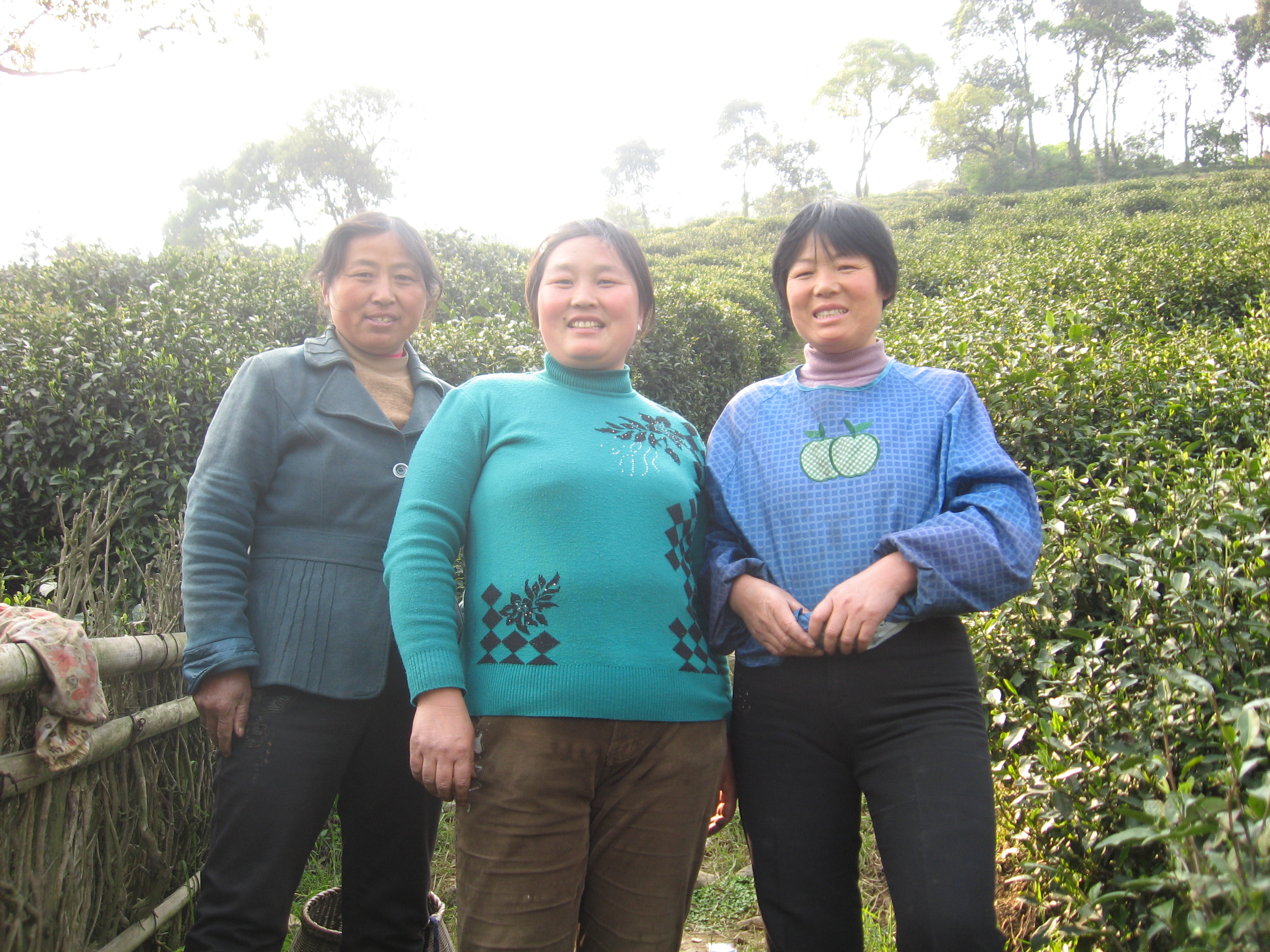
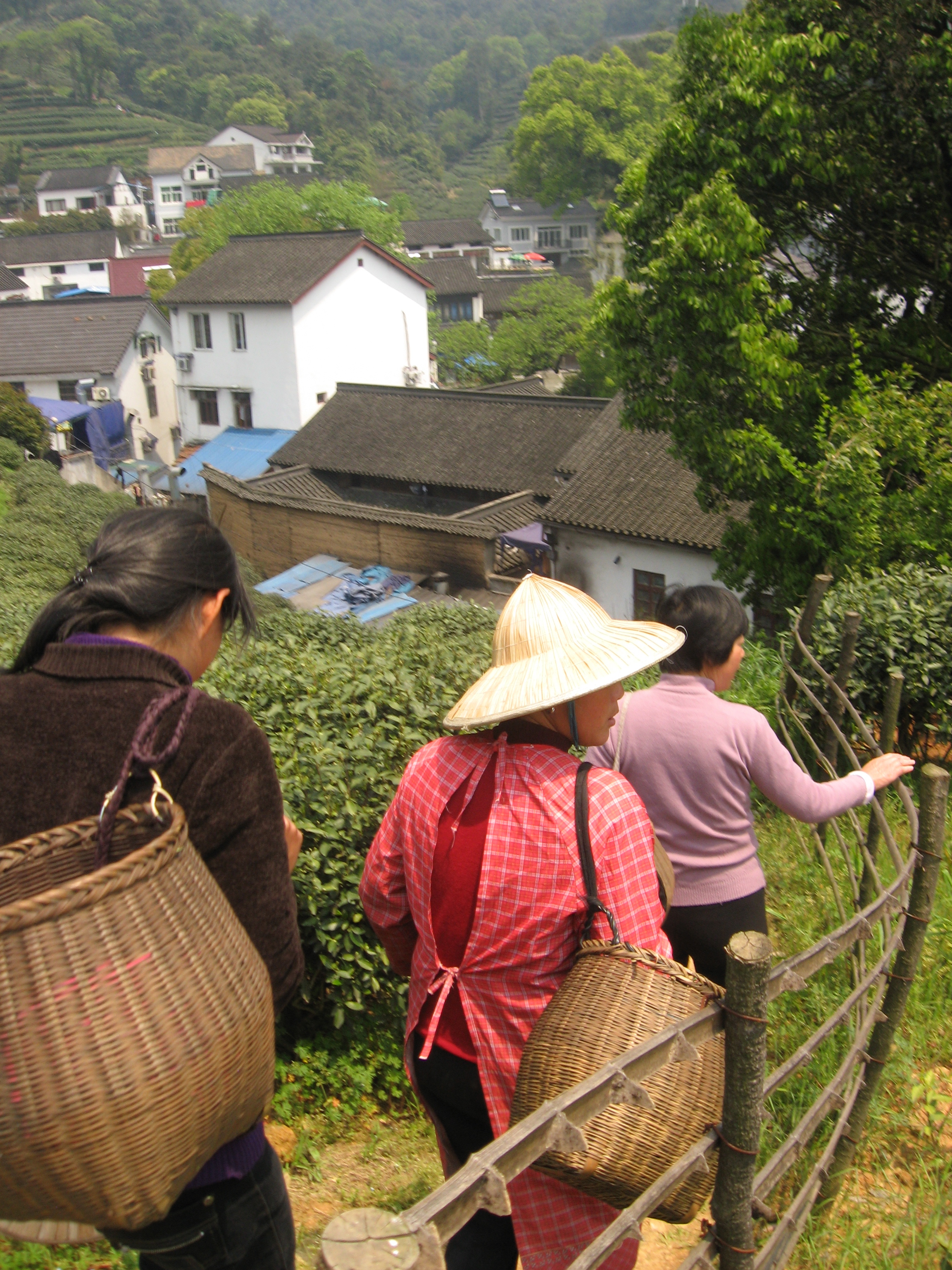
From Jan-May of 2010 I read a lot of literature on the subject. Like, so much that even my week-long stint in the hospital ended with a book fortress around my bed (my hospital adventure and inside glimpse of the international clinic vs. Chinese hospital is another crazy story I’ll have to share one of these days). By May I was ready to get out in the field and began by picking tea alongside a group of migrant farmworkers (all women) who had come to a tea farm in Hangzhou from the inland province of Anhui (I hope through my new adventures to talk more about the coastal farms’ hiring of inland farm laborers).

IMG_0036         IMG_0035

In July I traveled to a mountain called Daping, outside the capital of Chengdu in Sichuan province. There, I interned at an environmental NGO, Global Village of Beijing (GVB), and met my friend Peng, who then took me to his parent’s home high in the northern mountainous region of Aba, and the epicenter of the 2008 earthquake. I spent the week climbing thorny trees alongside Peng and his parents, picking a spice called huajiao that is used in traditional Sichuan dishes.

me danile kidsHere’s my friend, Cheng, and me with the local kids that lived on the mountain where GVB is located. One of our jobs was to prepare presentations, including teaching songs about recycling to the kids, for the tourists that came to see the work the NGO was doing (the head of the NGO, Liao Xiao-yi, is one of China’s best-known environmental activists who was the Green Ambassador to the 2008 Beijing Olympics).

Sichuan.earthquake

On the drive through the mountains to Peng’s village, the devastation from the earthquake that hit more than two years earlier was still evident all along the roads- here’s a bridge still collapsed.

MePengTrees

Peng’s dad and I picking Huajiao in the trees.

Mom&Huajiao

With the last bit of light for the evening, Peng’s mom spread Huajiao out to dry on their cement rooftop. Nearly everyone in the village relied on this cash crop for their primary income.

Quick Side note: Peng’s village was decimated during the earthquake, and in the aftermath when many of the men were hired on reconstruction projects outside the village, Peng paid a woman from a neighboring village to come and train the women in his village in the art of a making traditional embroidered handicrafts. He paid all of the women’s salaries, and then bought everything they produced and took the products to Beijing to try and sell. Unfortunately, he was unable to afford the rent of the shop in Beijing, and returned to Sichuan to work at GVB without having recovered much of his investment. While I was staying with his family, Peng gave me some of the handicrafts the women had produced to take with me and try to sell back in the US. I displayed Peng’s crafts in my ‘community-based’ high school’s clothing store that teaches students business skills while providing a revenue stream for the school (you can check out my awesome community-connected high school here: http://www.tnsk.org/). It was just a few months ago that all of Peng’s crafts sold and I was able to send him all of the profit. Hooray!

Ok back to farming: from September to December of 2010 I contacted farmers using the World Wide Workers on Organic Farms (WWOOF) program. China has a pretty unique situation with WWOOF in that if you are a rural citizen (and citizenship in China is divided between urban and rural) you are allocated a plot of land through the collective (I’ll dig more into this in later posts). So hypothetically any rural Chinese family can sign up to host people who want to come help them farm their plot (China is the only country where WWOOF doesn’t require the farmers to actually be organic). Nevertheless, there was no bum rush of WWOOFers dying to get out to rural China– I was the first WWOOFer all of my families had hosted, and in one case I was even the first western foreigner the village had seen (when explaining that I was from the US, I was routinely met with disbelief and questions of whether I was a Uyghur from Xinjiang).

There’s too much to get into now, so I’ll just provide a primer of each visit and then have separate posts with more details on each experience:

My first WWOOF visit was to a farm outside Yangzhou in Jiangsu Province. My gracious “host sister” there, Yu Qun (Julie), is a translator for a German contracting company in Nanjing (we’re still in touch, Hi Julie!), and speaks impeccable English. She took me back to her parents house in the village to help with rice harvesting around the time of the autumn moon festival. Here’s a few photos:

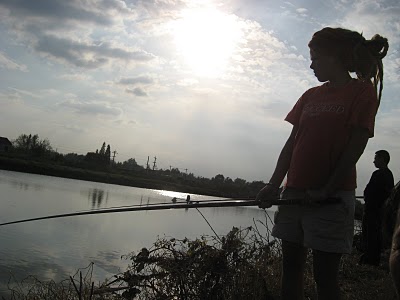
Fishing

My host family and I caught fish on the local fish farm for dinner; price for fishing that evening: one pack of cigarettes paid to the fish-farm boss.

Julie&Fam

Here’s me (guess which one) with Julie (far left) her Mom and Dad (middle) and their next-door-neighbor (sunflower girl).

My second WWOOF visit was to Yonghua, a rural village in Jilin province just a few kilometers from the border of North Korea. Those of you that know me are probably smiling because you’ve heard what happened there a bajillion times, especially once I decided to make this my default China story (yes, I’m a sucker for the shock factor) whenever prompted with the question “so what was China like?”

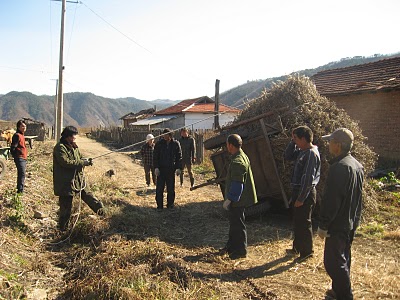
Jilin Tipped

My ‘host brother’, Yang, and I helped turn over a family’s trailer that had tipped from the weight of brush. This family, like most families in the village, was preparing for winter by gathering dried corn stalks and sticks to feed their cows and use as firewood throughout the winter.

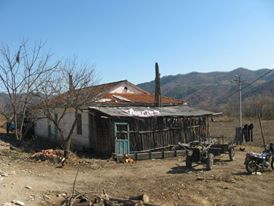
Jilin.Housefarm

My host family’s house.The front fenced area was for the goats.

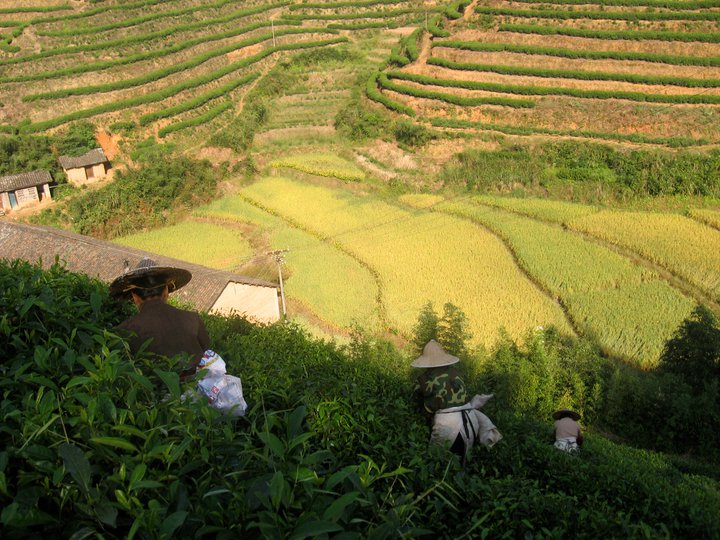
My third WWOOF visit was to a tea farm in Suichang, a rural village in Zhejiang Province. The family: grandparents, mother and father, and two young girls, hired laborers from more remote villages to help pick tea while they ran the tea processing plant. When I returned to their farm two months later, the  mother and father were partners in running a hotel and restaurant business while the grandparents were running the tea farm and looking after the grandkids.

155267_10150358316965437_2496998_n-1

These women traveled from their remote villages (leaving their families behind) to live on the tea farm and work 12 hours days during the harvest season.

SuichangTeaProcessing

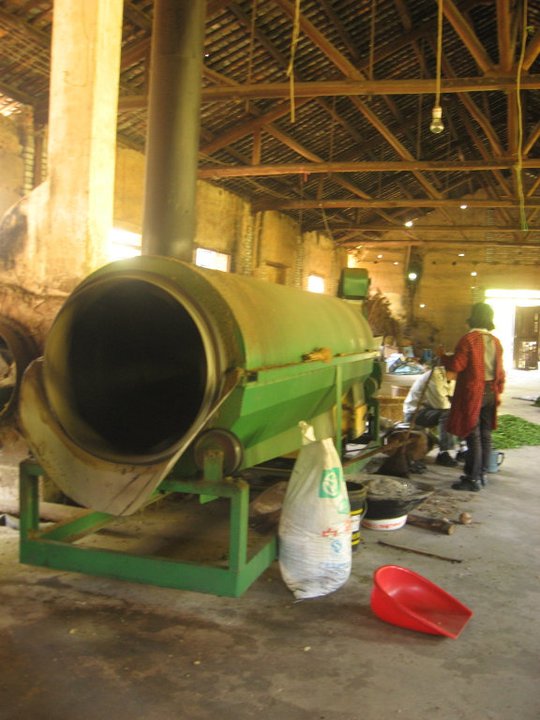
Here’s my host mom with the tea processing machine – they fed the leaves through the far end where they cycled around at high temps before being burped out the hole on my end, where I gathered the leaves into piles to be fed back through until they were well burnt.

TeaFarmView

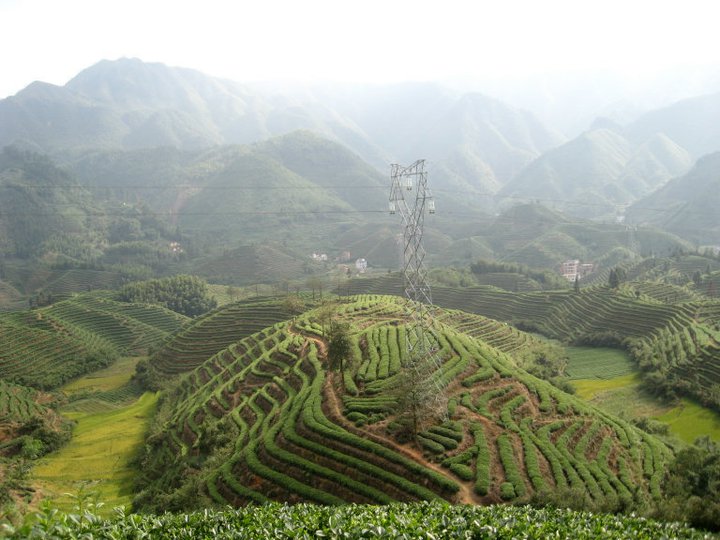
Here’s a view from a perch on the hilltop just above my host family’s house.

My final WWOOF visit was to a village outside Haikou on the island of Hainan. This older retired couple actually had urban citizenship, but decided to buy a house with a small farm in the countryside to escape city life. They were also a very safety-conscious couple, as demonstrated by my confinement to the inside walls of the farm compound. While this did hinder my observations of broader village life, I did not let it deter my 10-year daily run routine, even if I did feel a bit like a hamster on a wheel.

DSC06629

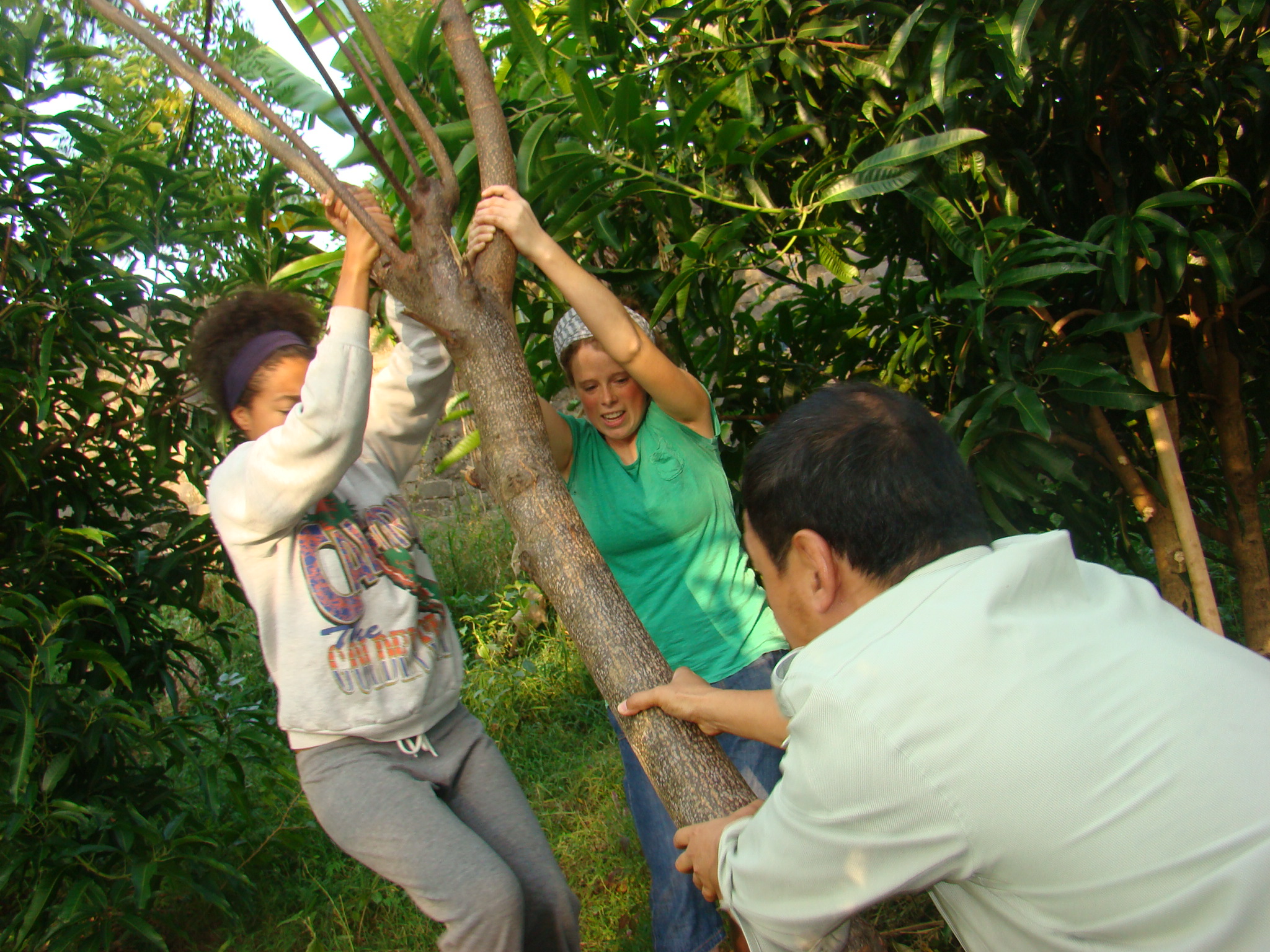
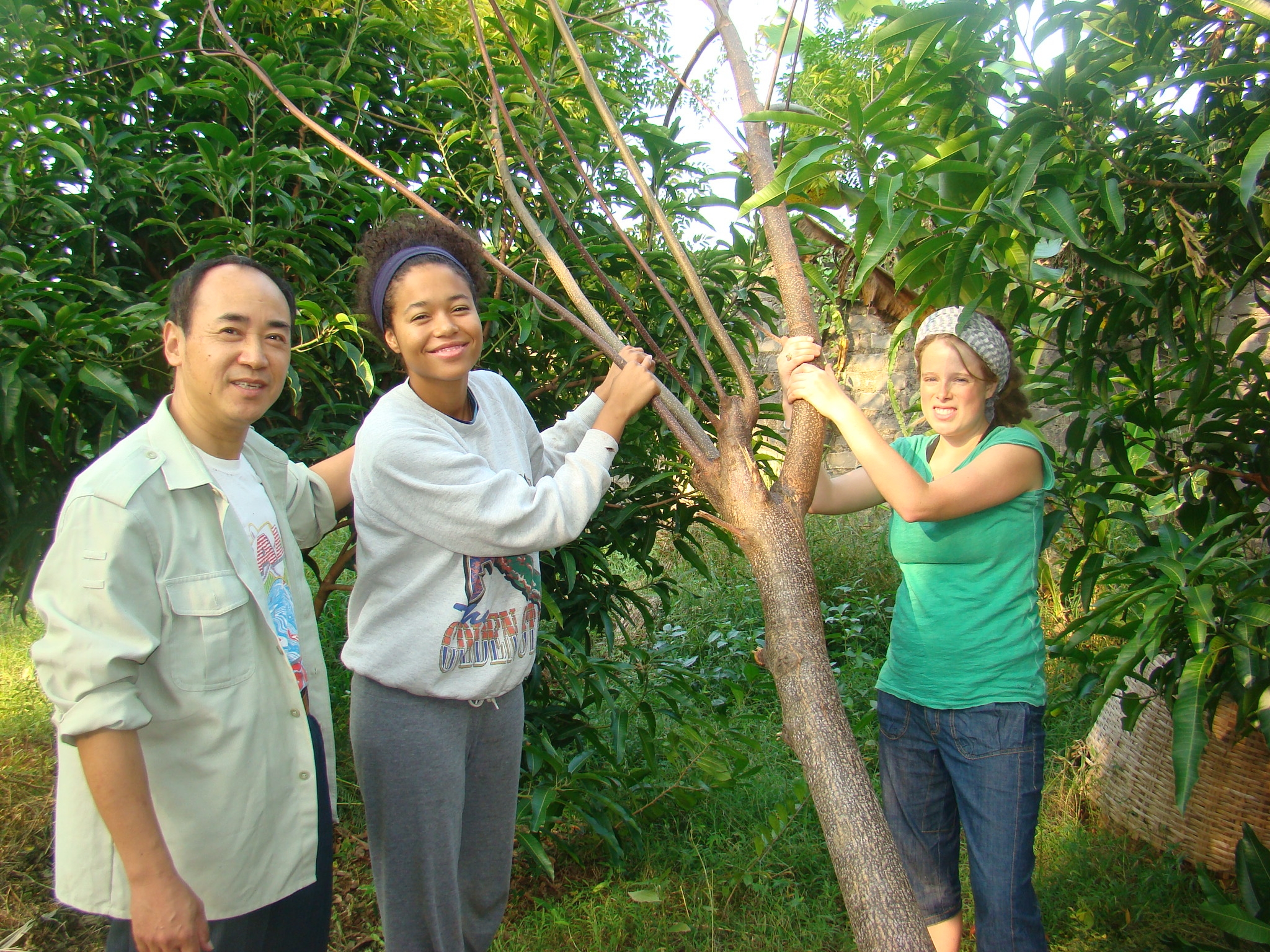
Felling trees inside their compound; this was the one visit where one other WWOOFer happened to be their first visitor along with me!

Me.Friend.Dad.Tree

Ok that’s all for now, but stay tuned– I’ll be updating periodically over the next few weeks with individual posts and photos from each field visit.

Lastly, as a general guideline I would love to hear any comments, or try my best to answer any questions, but please do understand that this is a learning experiment- I by no means intend to declare myself ‘an expert’ with ‘the answers’. Rather, I hope that my experiences and struggle to understand these questions may help stimulate your own thoughts on the issues, and perhaps inspire conversations outside of this space. If you’d prefer not to use the comment box, please feel free to email me at elena.kayes@gmail.com

Posted in Zhejiang Province | Tagged , | 2 Comments